News
Novo Nordisk Donation Strengthens Research and Education in Plastic Materials
Published online: 09.09.2026
News
Novo Nordisk Donation Strengthens Research and Education in Plastic Materials
Published online: 09.09.2026
Novo Nordisk Donation Strengthens Research and Education in Plastic Materials
News
Published online: 09.09.2026
News
Published online: 09.09.2026
By David Graff, AAU Communication and Public Affairs
How do temperature, pressure, speed, and cooling influence the structure and properties of a plastic material?
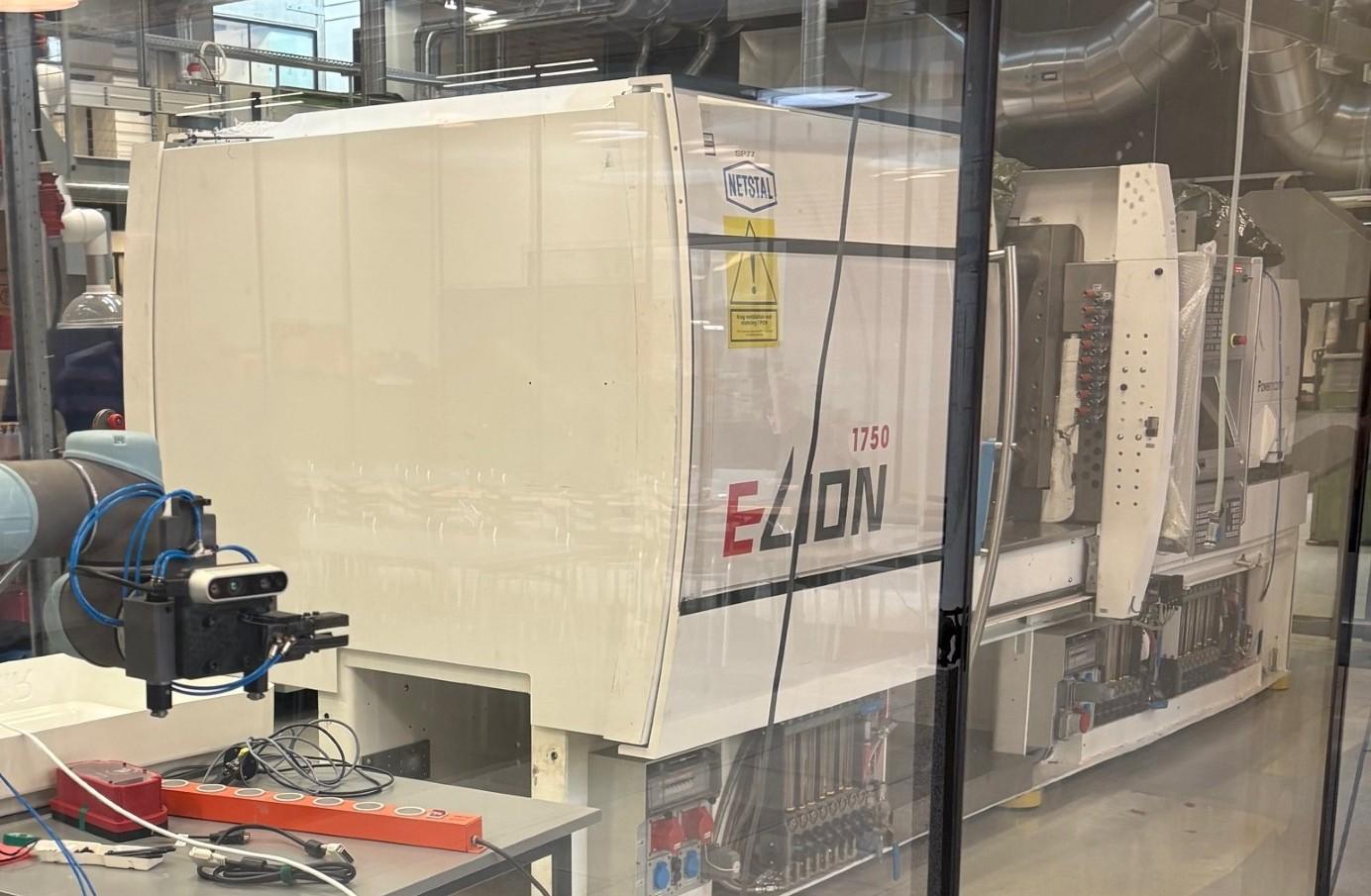
Researchers and students at Aalborg University’s Department of Materials and Production can now investigate this question under much more realistic conditions, following Novo Nordisk A/S’s donation of a modern, fully electric injection moulding machine designed for industrial-scale production.
The machine was previously used by Novo Nordisk for development work and the manufacture of plastic components for clinical trials.
The idea for the donation emerged when Senior Circular Materials Engineer Jacob Moberg Sandager from Finished Product Manufacturing, Science and Technology (FPMSAT) at Novo Nordisk A/S visited Aalborg University as part of a collaborative project on the more sustainable use of plastics.
“Universities often have highly advanced measurement equipment and can carry out detailed analyses. However, if they are unable to manufacture their own test specimens under realistic processing conditions, an important link is missing. With this new machine, both researchers and students can produce the materials and components they wish to investigate in a way that more closely reflects industrial practice,” he says.
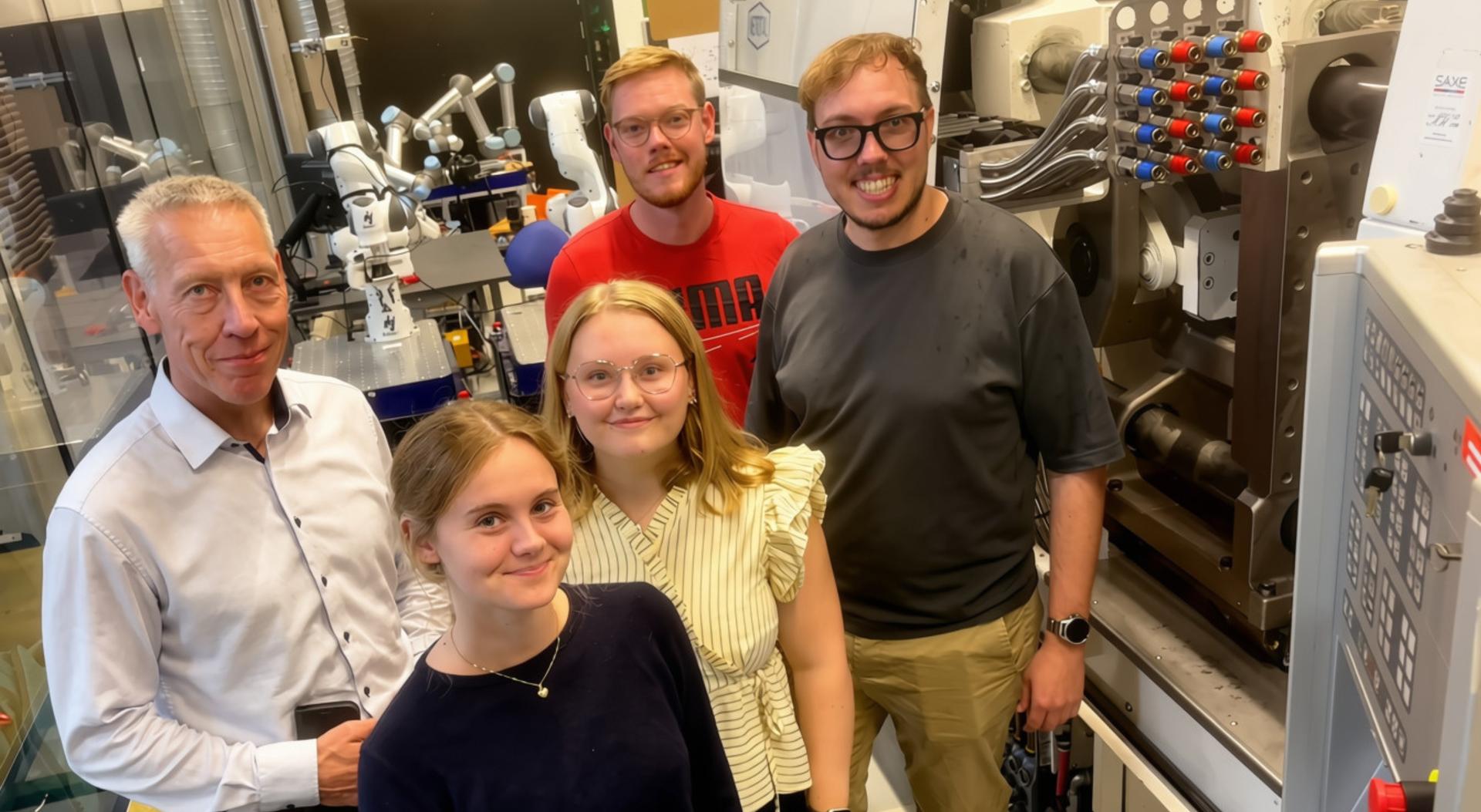
For Professor Jesper deClaville Christiansen, the machine will become a new "workhorse" in the laboratory.
A significant part of the department’s materials research focuses on the relationship between manufacturing processes, material structure, and material properties. Plastic materials are highly sensitive to their processing history. Temperature, pressure, shear rate, and cooling conditions all help determine the final microstructure and, consequently, properties such as strength, dimensional stability, and shrinkage.
“If we conduct experiments only on small-scale laboratory equipment, the materials are not exposed to the same conditions as they would be in industrial production. We can now manufacture test specimens under realistic conditions and directly link the manufacturing process to our analyses and simulations. This provides more relevant results and opens up research opportunities that would otherwise have been difficult to pursue,” says Jesper deClaville Christiansen.
The machine can be used to investigate recycled plastics, fibre-reinforced polymers, and materials containing pigments or other fillers. Researchers will also be able to compare physical experiments with advanced simulation tools, providing a more comprehensive understanding of what happens to materials during filling, packing, and cooling.
The donation will also have a significant impact on teaching. Each semester, students at the department work on project-based assignments involving materials and manufacturing processes. Over the years, hundreds of students have gained experience with injection moulding using the department’s existing equipment.
The new machine will give them access to a modern industrial technology platform similar to what they may encounter in their future careers.
With the machine, theory becomes tangible. Students can adjust process parameters and immediately observe the consequences. Too little pressure may prevent the mould from filling completely, while excessive pressure can make component ejection difficult. Changes in temperature can affect surface quality, internal structure, and dimensional accuracy.
“You can describe and explain the process on a whiteboard, but injection moulding involves so many interacting parameters that students need hands-on experience to truly understand them. When a setting is not merely a number on a screen but has a visible impact on the finished component, learning becomes both more authentic and more applicable,” explains Jesper deClaville Christiansen.
Jacob Moberg Sandager also points out that practical experience can make the transition from university to industry much smoother.
“Even highly qualified graduates with a strong theoretical foundation need time to become familiar with industrial production equipment when they start a new job. Just a few days of practical experience with an industrial machine can make a significant difference. Students can see that the theory they learn is actually applied in industry,” he says.
Injection moulding machines of this size typically cost several million Danish kroner when purchased new. At the same time, they often fall between categories in university funding structures: they are too expensive to be covered by ordinary operating budgets, yet they are not always regarded as advanced analytical equipment eligible for dedicated infrastructure grants.
“There is a gap in the Danish research infrastructure when it comes to costly, industry-oriented core equipment. That is why this donation is exceptionally valuable to us. It enables us both to enhance the quality of our research and to provide students with experience of a modern manufacturing process,” concludes Jesper deClaville Christiansen.